Carbonization vs Activation Furnace: Why an Activated Carbon Line Needs Both
1. Two Stages, Two Jobs
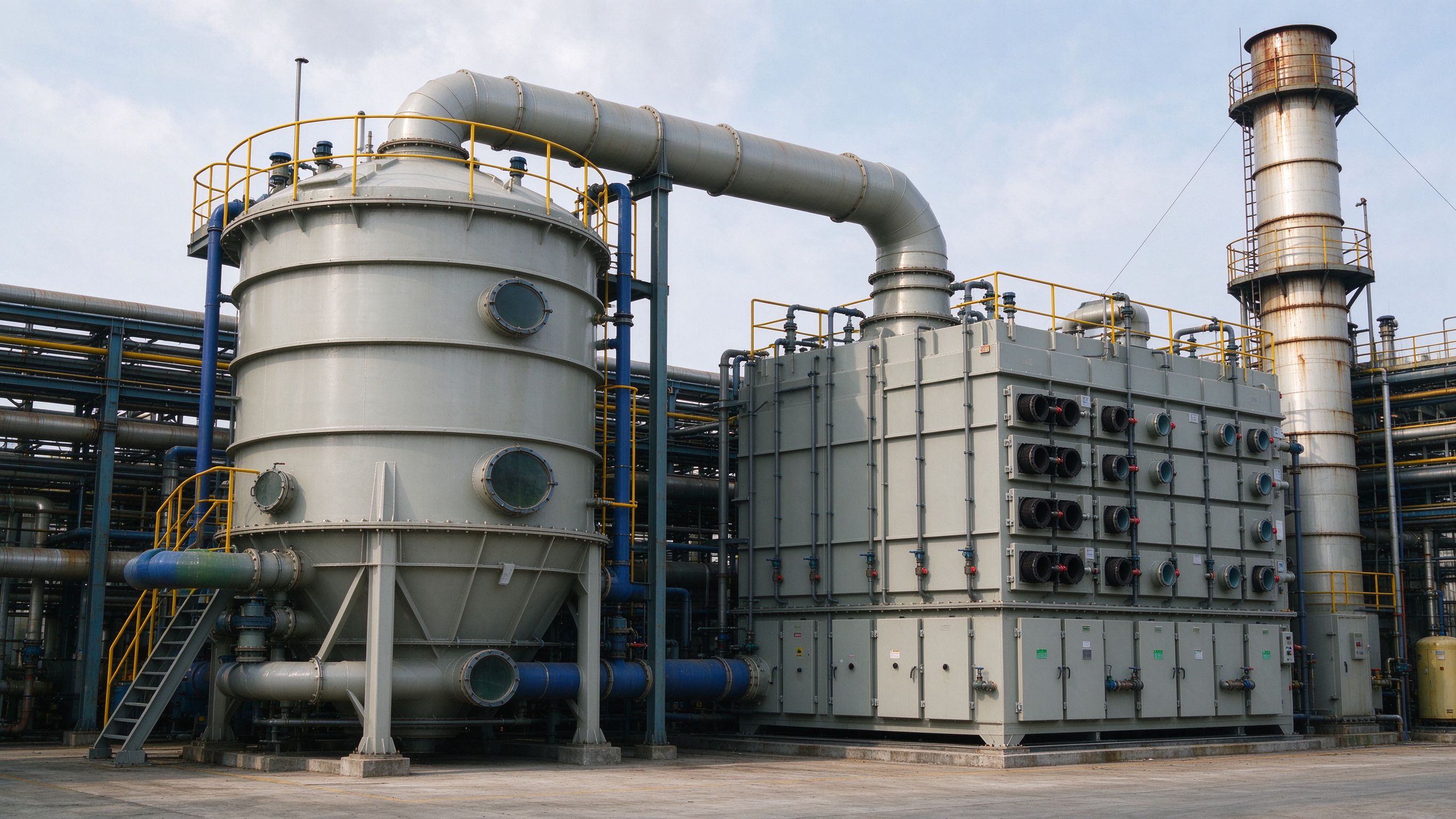
Carbonization turns raw material into char. Activation turns char into porous carbon. One removes volatiles, the other builds a pore network. Removal needs oxygen exclusion and slow heating; structure building needs steam and controlled burn-off above 850°C. The requirements are close to opposites, which is why two vessels are used.
2. Carbonization: 400–600°C
The usual window is 400–600°C, with shell feedstocks at 450–550°C. Heating must be slow. Volatiles come off in bulk between 200 and 300°C, and the ramp there is held at 5–10°C per minute. Faster and the surface seals while the core still releases gas, giving char that is burnt outside and raw inside.
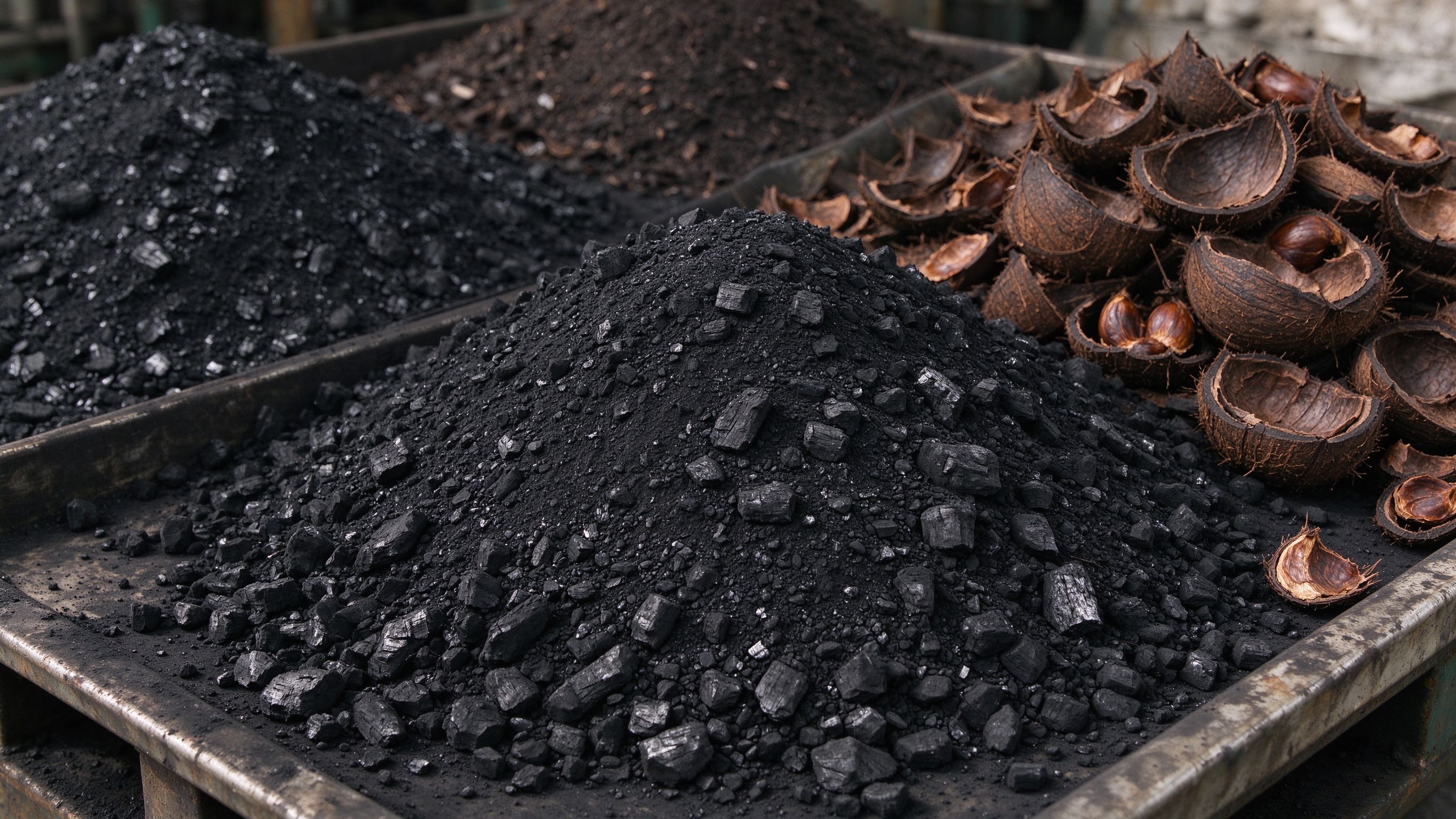
Residence time runs 30–90 minutes. Char yield on a dry basis is typically 30–40% for shell feedstocks, so one tonne of raw material yields three to four hundred kilograms of char. Volatiles fall from over 70% to 10–20%, surface area stays in the tens of m²/g, and what comes out is still char, not activated carbon.
3. Activation: 850–950°C
Activation runs at 850–950°C with steam, flue gas or both. The steam-carbon reaction is endothermic and roughly doubles every 50°C, so temperature accuracy here sets the pore structure. Steam-to-carbon ratio is typically 0.5–1.5 kg/kg, residence time 1–4 hours.
Burn-off is held at 30–50%. Too little and pores never open, so iodine value stays low. Too much and walls burn through, structure collapses, strength drops with it. The operating target is therefore the match between temperature, steam rate and time, not maximum temperature. Surface area ends up at 800–1200 m²/g.
4. Why One Furnace Fails
Three conflicts. Temperature: 400–600°C rising slowly at the feed end against a stable 850–950°C at the discharge end, with a 300°C transition between. The refractory lining then lives in continuous thermal cycling and its service life shortens, so maintenance downtime eats the capex saved. Atmosphere: carbonization needs oxygen exclusion, activation needs steam injected; suppressing oxidation at one end while promoting it at the other requires strict zoning, and once zoned the vessel is two furnaces in one shell. Residence time: thirty to ninety minutes against one to four hours is an order of magnitude, so a single setting either over-carbonizes or under-activates.
Integrated rotary kilns exist, using internal dams and multiple injection points. They demand narrow particle size, offer little operating margin, and suit one feedstock and one grade.
5. Line Order and Capacity
Sequence: preparation, carbonization, crushing and screening, activation, washing, drying, packing. The crushing step is not optional, because char particle size sets bed permeability in the activation furnace.
Size activation at 1.1–1.2 times carbonization. Crushing loses 5–10% of the char as fines, and activation furnaces lose 5–10% of annual hours to ash removal and lining repair. Match them one to one and activation is the bottleneck by design.
FAQ
Q: Does a higher carbonization temperature make activation easier?
A: No, the opposite. Above about 600°C the char begins to graphitise and loses reactivity, so activation cannot burn it at the same temperature and steam rate. Operators then raise temperature or extend time, and yield drops further.
Q: Can the crushing step be skipped?
A: No. Uneven particle size creates uneven bed permeability, so some material over-burns, some under-burns, and iodine value scatters within a single batch.
Q: Does a plant under three tonnes per day still need two furnaces?
A: Yes, but batch equipment works. Below that output the heat lost at each start and stop stays acceptable per tonne of product; above it, continuous operation wins clearly.
Keywords: carbonization furnace, activation furnace, activated carbon production line, activation temperature, carbonization yield