How to Choose a Spent Activated Carbon Regeneration Furnace: Three Kiln Types Compared
Why Regeneration Kilns Are Getting More Attention
GB/T 47051-2026, the first systematic national standard for thermal regeneration of spent activated carbon in China, took effect on 1 August 2026. It sets mandatory requirements on regeneration temperature control, sealed negative pressure, energy consumption limits, regenerated carbon quality and pollutant emissions.
Many existing regeneration lines were built with a single old rotary kiln, manual temperature observation and simple water scrubbing for off-gas. Under the new standard such lines face three problems at once: unstable iodine value recovery, off-gas that cannot pass acceptance, and energy use that cannot be accounted for.
Three Main Kiln Types
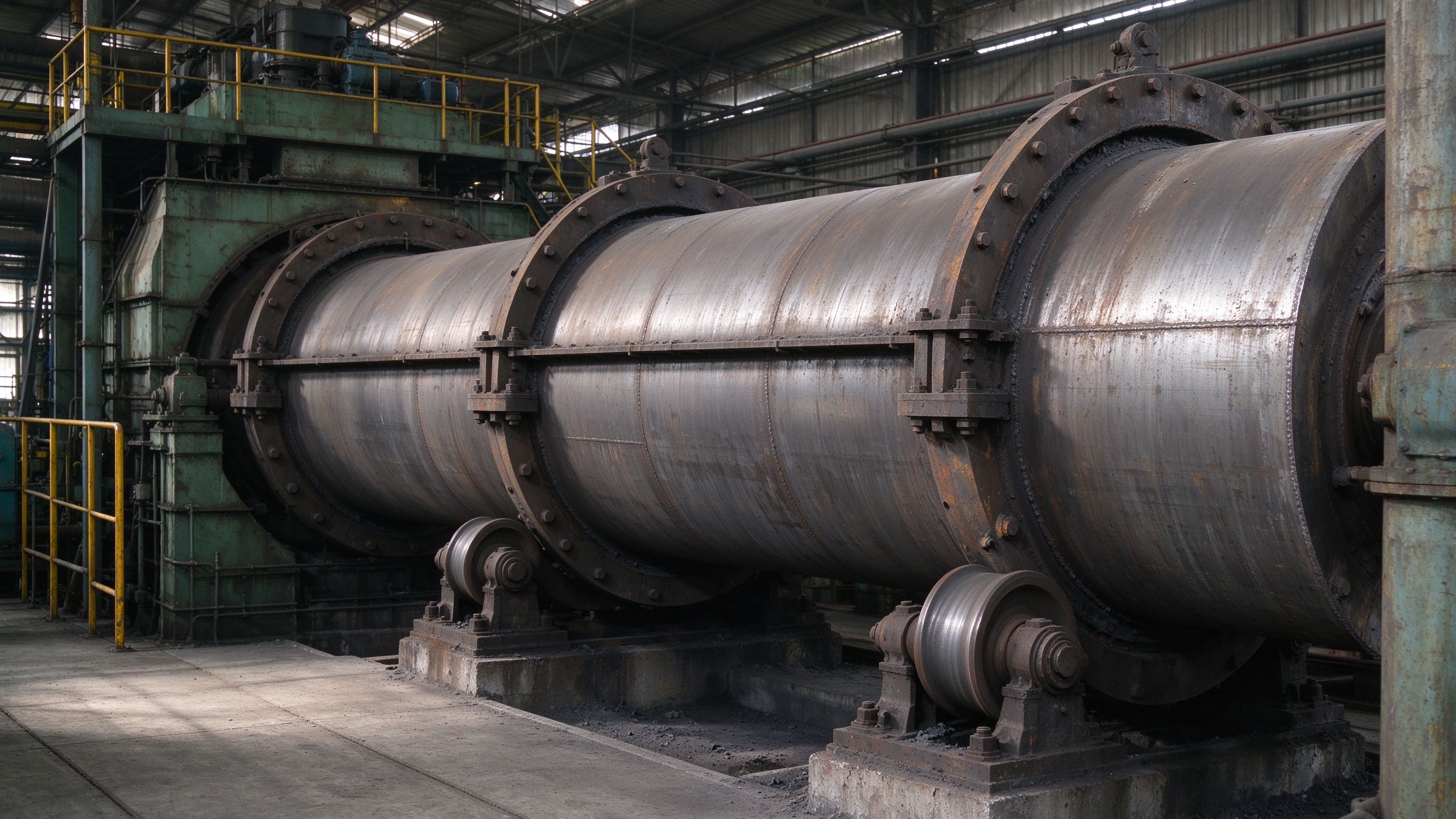
Rotary regeneration kiln. An inclined rotating cylinder moves spent carbon from the high end to the low end while steam or hot flue gas acts as the regeneration medium. Wide feed tolerance (granular, crushed and powdered carbon), continuous operation, typical capacity 0.5–10 t/d, low maintenance cost. Watch the axial temperature gradient — the discharge zone needs its own thermocouple, otherwise you get local overheating at one end and under-regeneration at the other.
Multiple-hearth kiln. Vertical hearths with rotating rabble arms move carbon downward while hot gas passes upward through the bed. Residence time is uniform and temperature distribution is flatter, which suits cases where batch-to-batch consistency matters, and the footprint is small. The trade-off is that rabble arms and hearth plates wear and deform at temperature, so maintenance frequency is higher, and high fines content causes blockage.
Fluidized bed kiln. Carbon is suspended by gas flow, giving excellent gas-solid contact and fast heat transfer. Short regeneration time, high throughput per unit volume, suited to large centralised regeneration centres. It requires relatively uniform particle size and strength; friable carbon suffers high attrition loss, and the dust collection and recycle systems add capital and operating complexity.
Rule of thumb: under 10 t/d with mixed feed and limited budget — rotary. Consistency-critical with tight space — multiple hearth. Large volume, uniform feed, experienced operators — fluidized bed.
Four Calculations Before You Buy
1. Temperature and iodine recovery. Thermal regeneration has three stages: drying (100–150°C), desorption/carbonisation (300–500°C) and high-temperature activation (700–900°C). The high-temperature stage decides iodine recovery. Ask two questions: what is the temperature control accuracy in the high-temperature zone, and where are the thermocouples located? A supplier who quotes only a maximum temperature, with no control accuracy, is usually selling an open-loop machine.
2. Regeneration loss. Burn-off, breakage and dust carry-over typically total 5–10%. Above that, investigate: excessive temperature, too much mechanical agitation, or inadequate dust recovery. At 5 t/d, cutting loss from 10% to 6% is equivalent to gaining 4% of finished product for free.
3. Energy per tonne of qualified product. Compare gas, biomass, electric and off-gas combustion as heat sources, but compare comprehensive energy per tonne of qualified regenerated carbon — including water evaporation in the drying stage and fan power for off-gas treatment. If the spent carbon is wet, pre-dewatering and waste-heat recovery usually save more than improving kiln thermal efficiency.
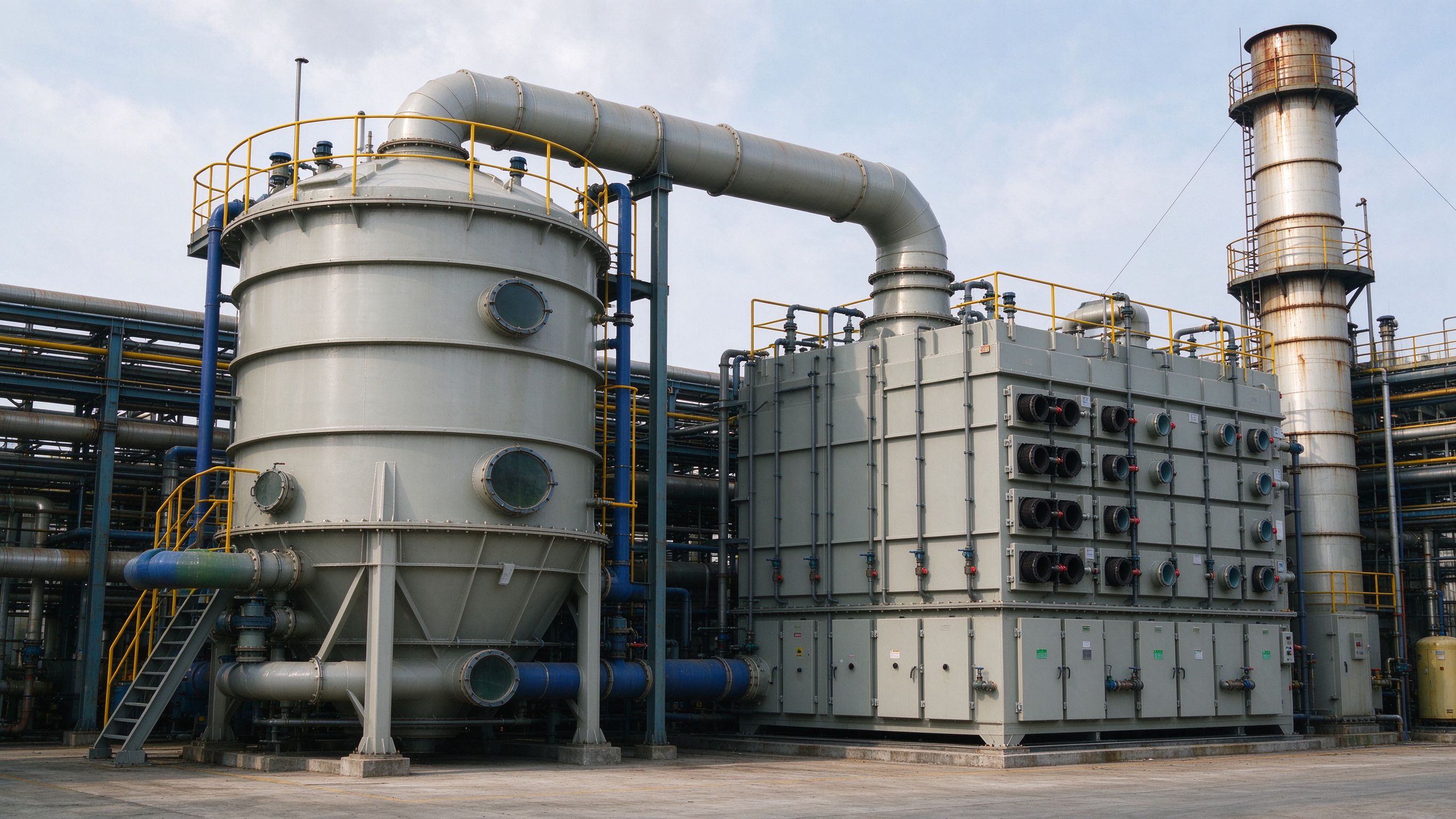
4. Off-gas that passes acceptance. Organics adsorbed on the spent carbon are all released during regeneration. A typical train is secondary combustion above 850°C with adequate residence time, waste heat recovery, rapid quench, alkaline scrubbing and dust removal. Stable secondary combustion temperature and a fast quench that avoids the dioxin formation window are hard requirements, not options.
FAQ
Q: How much iodine value can be recovered? Typically 85–95% of virgin carbon when the process is well controlled. Heavily loaded or contaminated carbon recovers less; confirm by bench test rather than accepting an upper-bound promise.
Q: Can an existing rotary kiln be retrofitted? Check three things: shell sealing, whether staged temperature control exists, and whether the off-gas train is complete. Missing off-gas treatment and thermocouples — retrofit pays. Deformed shell, failed seals, no closed-loop control — replacement is usually cheaper than retrofit.
Q: Can powder and granular carbon run in the same kiln? A rotary kiln tolerates both, but reduce agitation and strengthen dust collection at high fines content. Multiple-hearth and fluidized beds are more sensitive, so declare the particle size distribution during selection.
One Honest Note
A regeneration kiln is not a standard part; the same model performs very differently on different spent carbons. Run a bench or pilot test on your own carbon, and write iodine recovery, loss rate and emission figures into the acceptance clauses — do not accept a machine that merely turns.
Keywords: spent activated carbon regeneration furnace, activated carbon regeneration equipment, thermal regeneration, iodine value recovery, Henan Songrui New Refractory Materials