
Carbonization Furnace
Carbonisation is the stage before activation: coconut shell, palm kernel shell or nut shell is heated to 400–600°C in an oxygen-limited atmosphere to drive off volatiles and fix the carbon skeleton, producing char with initial porosity. Carbonisation yield is the first cost gate on the whole line — 28–32% for coconut shell — and it sets how many tonnes of raw material each tonne of product consumes. Furnace choice The rotary carboniser handles mixed granular and crushed feed, with three zones along the drum (drying 150–250°C, carbonisation 400–600°C, calcination 600–700°C), 30–60 minutes residence and 0.5–3 t/h capacity. Vertical carbonisers suit a single, narrow particle size and run continuously with better heat efficiency, but are sensitive to feed grading. Below 0.5 t/h, buying char is more economic than building your own carboniser. Control points Heating rate — too fast in the first zone releases volatiles in a burst, cracks the char and costs 3–5 points of finished hardness. Residual oxygen — above 2% the char simply burns, and each percentage point of yield costs about 150 CNY per tonne. Volatile routing — burning the off-gas back is what makes the carbonisation zone heat-neutral; venting wastes energy and fails environmental review. Discharge temperature — above 200°C the char self-ignites on contact with air and must be cooled below 60°C. Interface with activation Char has very low adsorption (100–200 mg/g iodine); its value is particle size and strength. Weak char cannot be turned into strong, low-ash product by any activation kiln. When buying char, check five things together: size distribution, bulk density, volatiles, ash and hardness.
Products in This Category
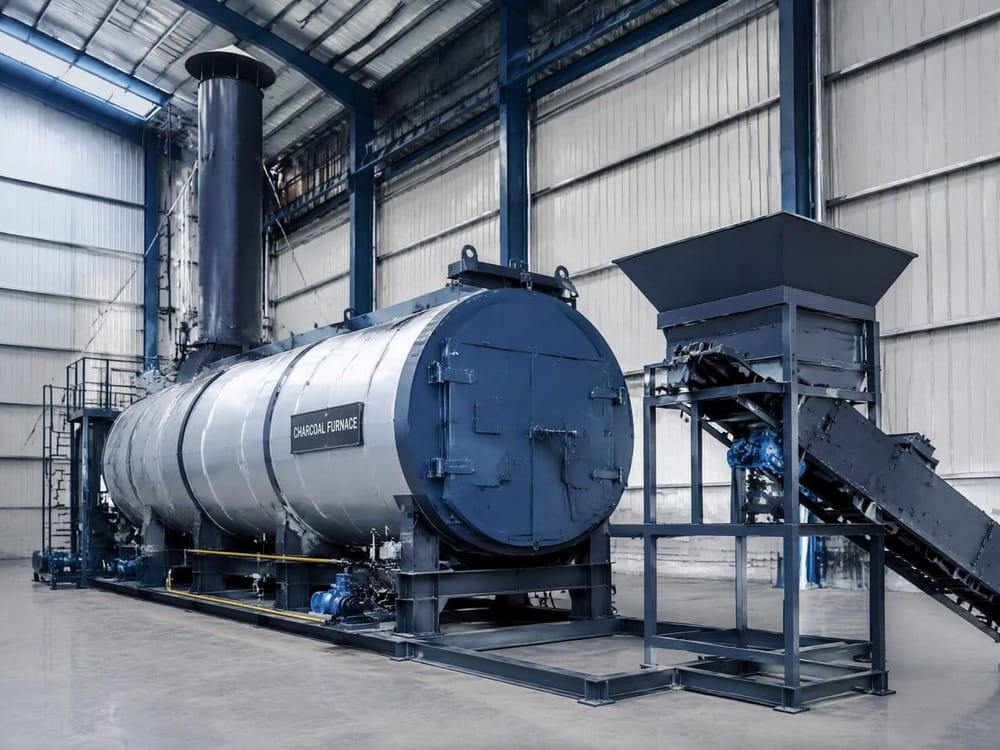
HRS Carbonization Furnace
Internal-heated rotary and vertical carbonization furnaces for oxygen-deficient pyrolysis, with high char yield and controllable flue gas.
View Details →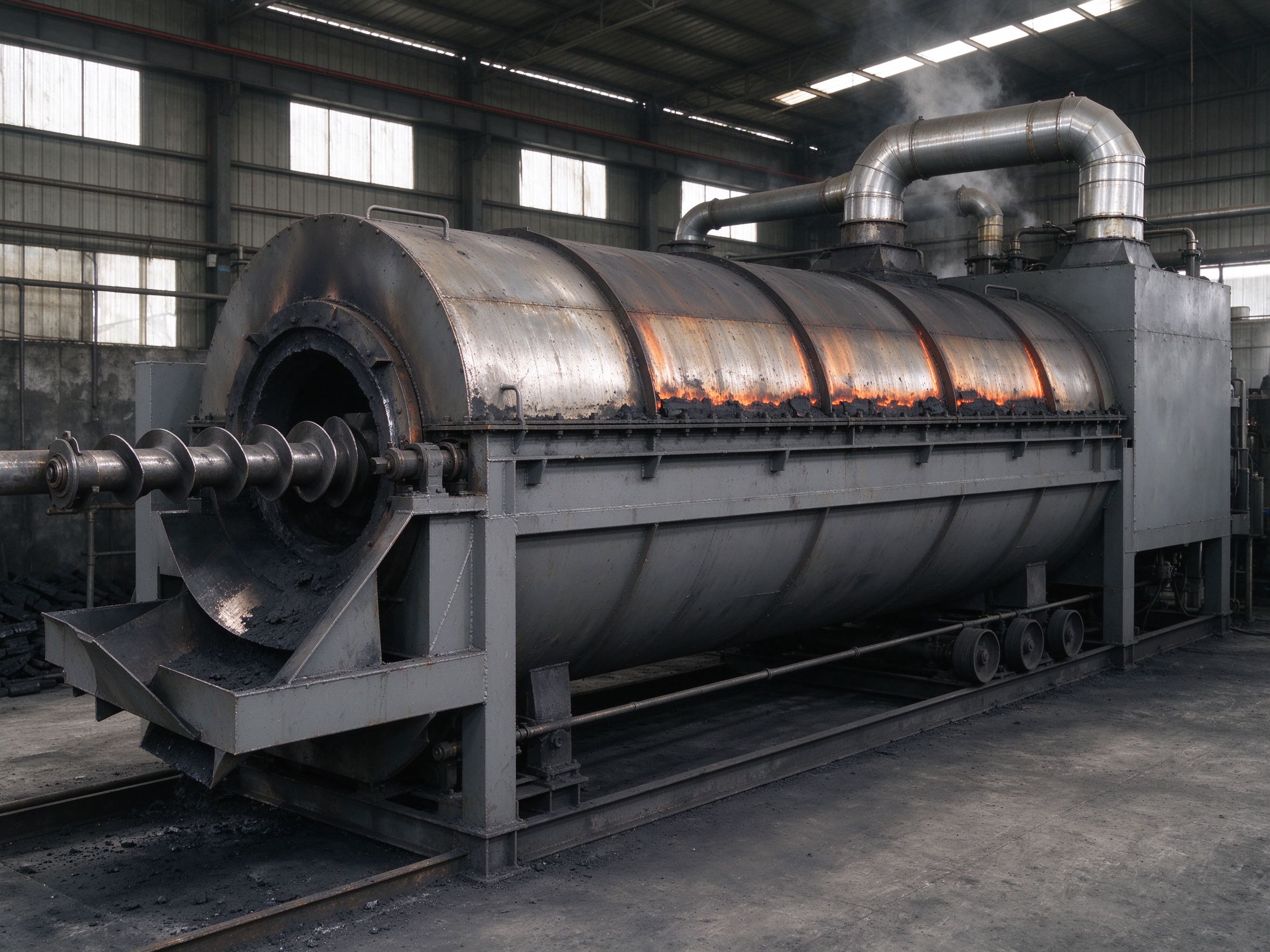
HRS Continuous Carbonization Furnace
Continuous rotary carbonization furnace for coconut, shell, wood and coal raw materials, producing uniform char for activation with large capacity, matching activation furnaces in continuous lines.
View Details →